
Fourteen foods. Twelve vitamins. One easy scoop.
Whole-food vitamin variety, ready to stir into whatever you already make.
Fourteen grains, seeds, fruits, vegetables and mushrooms, prepared as one fine powder. Stir a 0.5 g scoop into a smoothie, yogurt or oats. The sprouting, drying and milling are already done.

Meet the whole mix
Fourteen foods, each with a story to tell.
Tap an ingredient to discover how it grows, its place in the blend and a little of its food history.
Sprouted millet
Millet is a family of small-seeded cereal grains with deep food traditions across Africa and Asia. Here it is used as a whole grain and sprouted before milling.
A mild, finely milled base that helps carry the fruit, vegetable, seed and mushroom ingredients through the blend.
Millets are a diverse group of small-grained cereals. They were among the first plants domesticated and remain staple foods for millions of people across sub-Saharan Africa and Asia.
Sprouted buckwheat
Despite its name, buckwheat is not wheat. Its triangular seeds have travelled through porridges, pancakes and noodles in many food cultures.
Adds whole-seed body and a softly earthy, toasted character to the powder.
Buckwheat is a pseudocereal rather than a true cereal grass. Its seeds became part of noodles, groats, pancakes and porridges across many regions.
Flax
Flax is a tiny seed with a naturally rich oil fraction. It is one of the whole-seed ingredients in this blend.
Adds seed richness and naturally occurring ALA omega-3 fat, while helping the powder feel more substantial.
Spinach
Spinach is dried before it enters the fruit, vegetable and mushroom portion of the blend, concentrating the plant material into a small format.
Brings leafy-green food variety and contributes to the blend’s naturally speckled colour.
Broccoli
Broccoli belongs to the brassica family. Drying lets a small amount join the blend without bringing the water found in the fresh vegetable.
Adds another distinct vegetable source and a mild savoury layer beneath the fruit notes.
Carrot
Carrots naturally contain orange carotenoid pigments, including beta-carotene, which the body can convert to Vitamin A.
Contributes warm plant colour and is one of the foods behind the blend’s listed Vitamin A.
Orange
Orange fruit is dried so its citrus character and food solids can be distributed through a very small amount of powder.
Adds a light citrus note and is one of the recognizable foods associated with Vitamin C in the blend.
Apple
Apple has a familiar balance of fruit acidity and sweetness. In dried form, it can join a powder without adding fresh-fruit moisture.
Rounds the flavour and helps soften the more earthy notes from grains, greens and mushrooms.
Strawberry
Dried strawberry brings the whole fruit into a concentrated, shelf-stable format with its natural colour still visible as fine flecks.
Adds a bright fruit accent, a gentle berry note and some of the red specks visible in the powder.
Sunflower seed
Sunflower seeds are the edible kernels from the flower head. They naturally contain fats and Vitamin E.
Adds seed richness and is one of the foods associated with the blend’s listed Vitamin E.
Shiitake mushroom
Shiitake is an edible wood-growing mushroom with a long culinary history in East Asia and a naturally savoury flavour.
Widens the ingredient variety and adds a subtle savoury depth beneath the grains and fruit.
Maitake mushroom
Maitake grows in clustered, ruffled forms and has been valued as food in Japan and other parts of East Asia.
Adds another whole-food mushroom source and a mild earthy note to the background of the blend.
Chia
Chia is a small seed native to Mexico and Central America. Like flax, it naturally contains ALA omega-3 fat.
Adds whole-seed nutrition and helps give the fine powder a little more body when mixed into food or drink.
Sprouted quinoa
Quinoa is an Andean seed eaten like a grain. Indigenous Andean communities have maintained and developed the crop across generations.
Adds a third sprouted whole-food base with a delicate nutty character and its own long food history.
Quinoa originated in the Andes and was a staple food before the Inca period. Indigenous Andean communities maintained, selected and protected the crop through traditional knowledge and farming practice.
Food history sources: FAO International Year of Millets · FAO Quinoa knowledge hub
Vitamins by serving
See what’s in your scoop.
Start with our 0.5 g serving, then compare larger amounts. Choose a vitamin to see its amount, Daily Value and role in the body.
Showing nutrition for 0.5 g.
Vitamin D
Vitamin D helps the body absorb calcium and supports normal bones, teeth, muscles and immune function.
 Shiitake mushroomMaitake mushroom
Vitamin A
Vitamin A supports normal vision, immune function and the growth and specialization of cells.
CarrotSpinachVitamin C
Vitamin C supports collagen formation, acts as an antioxidant and helps the body absorb iron from plant foods.
OrangeStrawberryBroccoliVitamin E
Vitamin E acts as an antioxidant and helps protect fats in cell membranes from oxidative damage.
Sunflower seedChiaThiamin
Thiamin helps convert carbohydrate into usable energy and supports normal nerve and muscle function.
Sprouted milletSunflower seedVitamin B6
Vitamin B6 participates in protein metabolism, neurotransmitter production, immune function and hemoglobin formation.
Sprouted quinoaSunflower seedRiboflavin
Riboflavin forms coenzymes that help cells release energy from food and supports normal growth and red blood cell production.
Shiitake mushroomSpinachNiacin
Niacin becomes part of NAD and NADP, coenzymes used throughout energy metabolism, cell signalling and DNA repair.
Maitake mushroomShiitake mushroomVitamin B5
Pantothenic acid is used to make coenzyme A, which helps the body metabolize fats, carbohydrates and proteins.
Sunflower seedShiitake mushroomBiotin
Biotin acts as a coenzyme in reactions that metabolize fatty acids, glucose and amino acids.
Sunflower seedSpinachFolate
Folate supports DNA synthesis, cell division and normal red blood cell formation. Needs are especially important before and during pregnancy.
SpinachBroccoliVitamin K
Vitamin K is required to activate proteins involved in normal blood clotting and also participates in bone metabolism.
SpinachBroccoliVitamin B12
Vitamin B12 supports normal red blood cell formation, DNA synthesis and nervous-system function. It is made by microorganisms and is naturally concentrated mainly in animal-derived foods, so a blend of grains, seeds, produce and mushrooms is not expected to supply it.
Check the label: nutritional yeast and other plant foods contain meaningful B12 only when they are fortified. People following a plant-based diet may need a reliable fortified food or supplement source.
- Fat
- 0.06 g
- Saturated fat
- 0.01 g
- Trans fat
- 0 g
- Cholesterol
- 0 mg
- Sodium
- less than 0.1 mg
- Potassium
- 1.2 mg
- Carbohydrate
- 0.20 g
- Fibre
- 0.06 g
- Sugars
- 0.01 g
- Protein
- 0.05 g
The food images are familiar connections that help explain each vitamin family. They do not assign an exact share of a measured vitamin to one ingredient.
Approximate values for comparison, scaled from the ingredient data shown for 0.5 g. Daily Values use Health Canada’s reference for adults and children aged 4 and older. Rounding may differ from a finished Nutrition Facts table. Comparing a larger amount is not a serving recommendation.
Daily Value reference: Health Canada Table of Daily Values
A living process inside every seed
Why are the grains sprouted?
A seed holds an embryo and stored food. Add water and it begins to grow. Explore how the grains go from resting seeds to sprouts, then into the finished powder.
A small seed carries an entire beginning.
Inside the coat sit an embryo, genetic instructions and reserves of starch, protein and fat. Low moisture keeps most metabolic activity quiet until the right growing conditions arrive.
Water turns possibility into motion.
Through imbibition, the seed absorbs water, swells and restarts metabolic activity. Temperature, time and moisture guide the pace of the transformation.
The seed begins spending what it saved.
During germination, enzymes begin breaking down stored compounds to support the first root and shoot. Phytase can also reduce phytate, one of the compounds often called an antinutrient, although the size of the change depends on the crop and sprouting conditions.
The active moment is made shelf-stable.
After sprouting, the grains are stabilized, dried and finely milled. The result carries the sprouted grains into a format that can disperse evenly through a recipe.
General food and agriculture sources: Sprouted grains review, 2019 · Nutritional and end-use review, 2021
A closer look at sprouting
Small seeds. A little daily care.
Different seeds need different timings, but the rhythm is familiar. Food-grade seed, clean equipment, careful rinsing, good drainage, time, temperature control and safe storage all matter.
- 01
Choose food-grade sprouting seed and thoroughly clean your hands, jar, lid and work surface.
- 02
Soak the seed for the crop-specific time, then drain it completely.
- 03
Rinse and drain on a regular schedule while keeping air moving around the damp seeds.
- 04
Watch temperature, smell and appearance over several days as the seed germinates.
- 05
Follow food-safety guidance, cook when appropriate, chill promptly and use within the recommended time.
The sprouted ingredients in this powder are produced in a BRC-certified facility, undergo a microbial reduction step and are checked against finished limits for E. coli and Salmonella. Home sprouting is different: warm, moist conditions can also help bacteria multiply, so Health Canada advises thorough cooking and extra caution for higher-risk people.
Read Health Canada’s sprout safety guidanceA tiny growing lab
Grow a little. Learn a lot.
Grow a carrot in six quick steps. Follow the highlighted card in order, and see how life above and below the soil works together. Feeling mischievous? Send in a rabbit.
What goes into a vegetable?
A seed carries the blueprint and a little stored food. Start at step 1, then add what it needs to grow. Each completed step lights up the next.
Water wakes the seed.
The seed absorbs water and starts using its stored energy. Moisture helps it sprout, and later carries dissolved minerals to the roots.
Roots reach out and breathe.
Tiny root hairs absorb water and minerals. Pockets of air in loose soil supply oxygen so root cells can release the energy they need.
Small helpers recycle.
Bacteria and fungi break down organic matter and recycle nutrients. Some fungi partner with roots, helping them reach more water and minerals.
Minerals are building materials.
Roots take up minerals dissolved in water. Nitrogen helps build proteins, phosphorus supports energy transfer, and potassium helps regulate water. Minerals come from soil; plants do not create them.
Leaves turn light into fuel.
Using sunlight, leaves combine water and carbon dioxide from the air to make sugars. This is photosynthesis. Those sugars power growth and help build the plant.
A vegetable takes shape.
Over time, the plant uses sugars and minerals to build fibre, proteins and many vitamins and pigments, including the carrot’s orange beta-carotene. A good harvest also needs suitable temperature, space and care.
A visitor in the vegetable patch!
You grew a carrot!
Sunlight + air + water + soil minerals + living helpers + time → a growing vegetable.
This is a simplified growing story, not a claim about the nutrients in one serving. In a real garden, these processes work together over weeks.
And rabbits are only one part of garden life. Insects, slugs, disease, heat, frost and too much or too little water can affect a crop, too. Healthy soil, suitable conditions and attentive care all help.
Food and vitamin forms
The form matters. So does the food.
The amount and form of a vitamin, the food around it and your individual needs all affect how it is used. Here is a straightforward look at food-based and isolated vitamins.
Vitamins inside foods
Whole foods bring nutrients as part of a larger matrix rather than as one isolated compound.
- They arrive alongside fibre, fats, protein, minerals and plant compounds such as carotenoids and polyphenols.
- Food-first eating patterns rich in vegetables, fruits and other plant foods are consistently recommended for overall health.
- The surrounding food matrix can change how a nutrient is released, protected and absorbed during digestion.
- Using a varied food mixture brings many compounds together instead of asking one isolated nutrient to represent the entire food.
- Nutrient amounts can vary with the crop, harvest, processing and storage.
- Natural does not automatically mean more absorbable. The nutrient’s exact form and the rest of the meal still matter.
- Food alone may not correct a diagnosed deficiency or meet every person’s needs quickly enough.
Added or isolated vitamins
Fortified foods and supplements can deliver a precise amount of a specific nutrient.
- They can help close a diagnosed nutrient gap or meet a need that is difficult to cover with food alone.
- Some added forms are especially absorbable. Folic acid, for example, is generally more bioavailable than naturally occurring food folate.
- A consistent dose can be useful when public-health guidance or a healthcare professional recommends a specific amount.
- Concentrated doses make it easier to exceed an upper limit, especially when several supplements and fortified foods overlap.
- Some nutrients can interact with medicines or affect lab tests, so the full supplement list matters.
- Synthetic and naturally derived forms can differ in activity. Vitamin E is a clear example, while other vitamins follow different rules.
- A pill can deliver a nutrient, but it does not reproduce the fibre, fats, protein and plant compounds of the original food.
Fat-soluble: A, D, E and K
These vitamins are absorbed with dietary fat and can be stored in the body. That storage is useful, but it also means high supplemental doses can build up. Vitamin K can also interact with some blood-thinning medicines.
Water-soluble: C and the B vitamins
The body stores less of most water-soluble vitamins and excess is often excreted, but that does not make unlimited doses harmless. High supplemental intakes of some B vitamins and Vitamin C can still cause adverse effects.
Natural and synthetic Vitamin E are not equally active.
NIH explains that naturally occurring alpha-tocopherol is more biologically active by weight than synthetic alpha-tocopherol. This is a Vitamin E finding, not a rule that can be copied onto every vitamin.
Read the NIH Vitamin E evidenceSometimes the isolated form is absorbed more efficiently.
Folic acid from supplements and fortified foods is generally more bioavailable than naturally occurring food folate. Source alone cannot tell you which form will be absorbed best.
Read the NIH folate evidenceThe food around a vitamin can change its journey.
Food-matrix research shows that digestion must first release a nutrient before it can be absorbed. The matrix can affect that release and stability, and the direction of the effect depends on the food and nutrient.
Read the food-matrix reviewResearch and guidance: NIH folate bioavailability · NIH natural and synthetic Vitamin E · NIH supplement safety
Already part of our routine
A favourite in the Zentein kitchen.
We chose this blend for the same reason we keep reaching for it: fourteen foods and twelve vitamins in one easy scoop. It is part of our own routines, Superfood Collagen and several Elite Squares. Now you can bring home the pure powder and make it part of yours.

Superfood Powder
Boost your current recipe.
Fourteen foods, twelve vitamins, one easy addition to the food you already make. At a 0.5 g serving, Superfood Powder is basically tasteless when mixed into recipes, so it fits right into sweet or savoury favourites.
- Per serving
- 0.5 g
- Per bag
- 100 servings
- In the bag
- Scoop included
- Vitamin D
- 36% DVDaily Value per serving
Easy ways to use your powder
- Smoothies
Blend into your usual fruit or protein smoothie.
- Oats + yogurt
Stir into a bowl, then add your favourite toppings.
- Everyday drinks
Whisk into a drink you already enjoy.
- Homemade snacks
Mix into energy bites or pancake batter.
- Savoury meals
Stir into soup, chili or stew.
- Sauces + recipes
Mix into pasta sauce, BBQ sauce or your favourite savoury recipes.
Meet the other powder
Activated Organic Lion’s Mane Powder $50 CAD
Activated Organic Lion’s Mane Powder is in stock now. Get both powders for $100 CAD, save $10 and choose 2 free Elite Squares. Everything ships together while both powders are available.
What is Activated Organic Lion’s Mane Powder?
One mushroom. A little light. Vitamin D₂.
UV light helps convert a compound naturally present in Lion’s Mane into vitamin D₂. The activated mushroom is then dried and milled into powder.
A 500 mg serving contains 30 µg vitamin D₂ (150% of the Canadian Daily Value). A 50 g bag provides 100 servings.
Open the full Lion’s Mane ingredient file →A little more to enjoy together
Buy both powders. Save $10. Get 2 free Elite Squares.
Get one 50 g bag of Superfood Powder and one 50 g bag of Activated Organic Lion’s Mane Powder for $100 CAD, instead of $110. Choose 2 free Elite Squares in any mix of flavours.
Choose your 2 free Elite Squares
Both powders are included for $100 CAD. Use + to choose your two free Elite Squares.
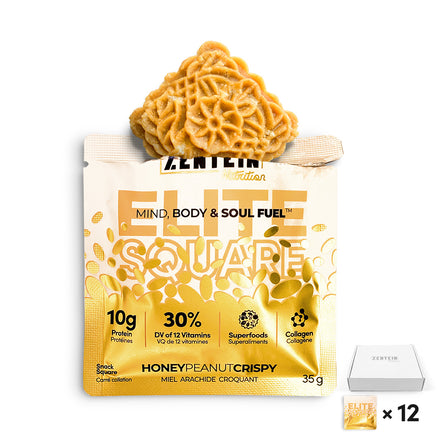
 Honey Peanut Crispy
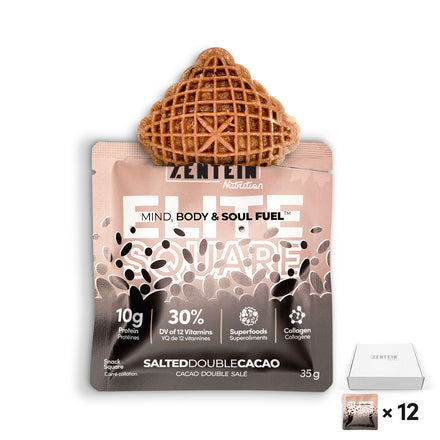
 Salted Double Cacao
 Almondy Raspberry
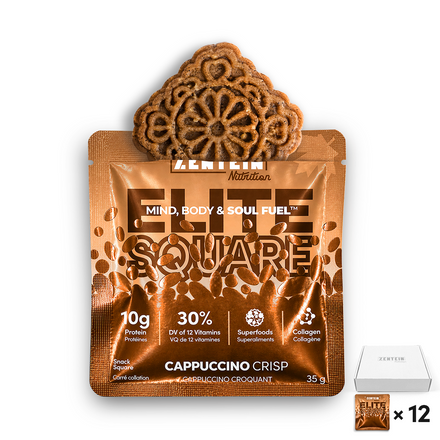
 Cappuccino Crisp
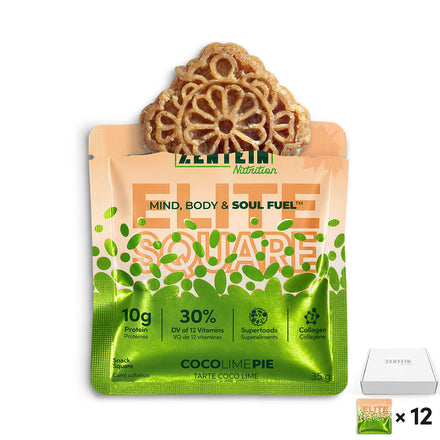
 Coconut Lime Pie
 PB&J
PB&J
Choose 2 more
Your current-batch bundle ships together.
- 01Ready now · one delivery
Superfood Powder, Activated Organic Lion’s Mane Powder and your 2 free Elite Squares ship together, alongside the other ready-to-ship items in your order.
- 02After either powder sells out
Each powder is prepared in batches. After either powder sells out, there is about a 4 week wait until that powder is back in stock. Order while both are available to receive them together sooner. We will accept preorders for the next batch and email you before your preorder ships.
The ingredient at a glance
Know what’s in the bag.
- Country of origin
- Canada
- Organic ingredients
- Sprouted millet, sprouted buckwheat, sprouted quinoa, flax and chia
- Format
- Finely milled grains, seeds, fruits, vegetables and mushrooms
- Colour + taste
- Light tan with yellow, brown and red specks; slightly grainy
- Food-safety + kosher
- Produced in a BRC-certified facility; certified kosher by COR
- GMO status
- Made without GMO ingredients
- Shelf life
- 12 months from manufacture when sealed and stored at room temperature
Processing
The millet, buckwheat and quinoa are sprouted, then the grains, seeds and dried produce are milled into a fine blend with a 30 to 60 mesh particle size.
Microbiology
Food-safety limits keep E. coli below 10 CFU per gram and require Salmonella to be absent in a 25 g sample. The sprouted grains also undergo a microbial reduction step.
Storage
The powder is kept sealed at room temperature and has a 12-month shelf life from the date of manufacture.
Allergen labelling
Packaged by Zentein in a facility that also handles peanuts, tree nuts and ingredients containing gluten. Always check the finished package for the current ingredient and allergen information.
Already in the Zentein family
Enjoy the blend, ready-made.
Find the same Superfood blend in Superfood Collagen and these Elite Squares.
 Made with the blendSuperfood CollagenShop Superfood Collagen
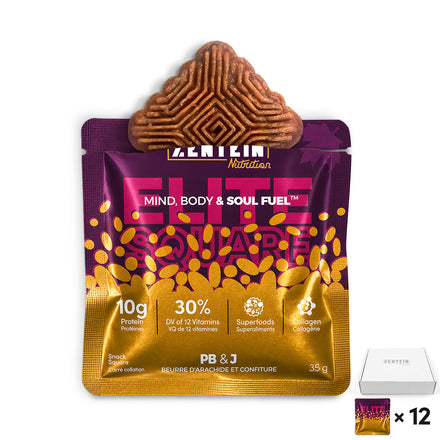
The blend is also built into all six Elite Square flavours. Find your favourite below.
The Zentein experience
Good food. People who care.
A few favourite five-star store reviews about shopping with Zentein.
“Shopping is easy. Delivery is fast. Customer service has been great!”
“easy and quick responses! questions always answered!”
“Great products. Our customers love the high protein content and great taste.”
Selected store reviews collected through Judge.me (verified customer reviews).
More customer stories →