

Discover the One Nutrient Scientists Identified Over 40 Years Ago that Supports Collagen Formation
Hint: Here's what research since 1981 reveals that most collagen products leave out

Wednesday, July 8
by Jenna Barton
Everyone deserves to feel as vibrant on the outside as they do on the inside.
But the picture many women have of healthy, radiant skin has been overcomplicated by influencers and the wellness community.
Below: the 5 things worth understanding about your skin after 45, and what that one nutrient actually does.
The information in this article summarizes general published research on collagen and vitamin C.
It is educational and not a study of any specific product or its results. The research reviewed includes:
40
Randomized Clinical Trials
2,688
Participants
3
Peer-Reviewed Papers
01
What Quiet Changes Happen in Your Skin After 45
When you look in the mirror and notice the little changes in your skin, you’re not imagining it.
Research has found skin collagen can decline by up to 30% in the first five years after menopause1, which affects skin thickness, elasticity and firmness over time.
Result: Skin doesn't snap back into place as easily after making facial expressions, potentially leading to fine lines or ridges in the skin.
Quick Fix: Topical creams can give an "instant glow," but they work at the surface. How your body builds collagen from within is a different process altogether.
And while everyone recommends collagen-rich foods...
...studies quietly show collagen intake alone isn't the whole story.
Rapid Collagen Decline
Collagen Intake Isn't The Whole Story

02
How this One Nutrient Affects Collagen Formation (at the Cellular Level)
Collagen is a protein your body naturally produces. When consumed, digestion breaks it down into smaller amino acids that are absorbed into the bloodstream.
Fibroblasts (the "Collagen Builder Cell") then use these amino acids to produce collagen in the skin and other connective tissues.
Why It Matters: Research points to fibroblasts needing Vitamin C to carry out this process5 — like how a baker needs an oven.
The Science: This seemingly common nutrient (Vitamin C) acts as a cofactor that supports natural collagen formation.
In fact, a 1981 study on skin cells suggests Vitamin C's presence affects how well collagen is built at the cellular level.
Researchers found that in vitamin C–deficient laboratory conditions, collagen formation and secretion were impaired because the collagen triple helix could not form properly.3
Vitamin C Supports Collagen Formation


03
The Other Part of Skin Health No One Talks About
Healthy skin isn’t only about collagen and Vitamin C, overall nutrition plays an important role too.
Other vitamins and minerals support processes involved in energy metabolism, antioxidant protection and overall skin health as well.
That's why a varied, balanced diet built around real foods can help support healthy aging by providing diverse nutrients that work together in complementary ways.
Here's the Single Easiest Way to Get Collagen, Vitamin C and 11 Other Essential Vitamins in One Go...
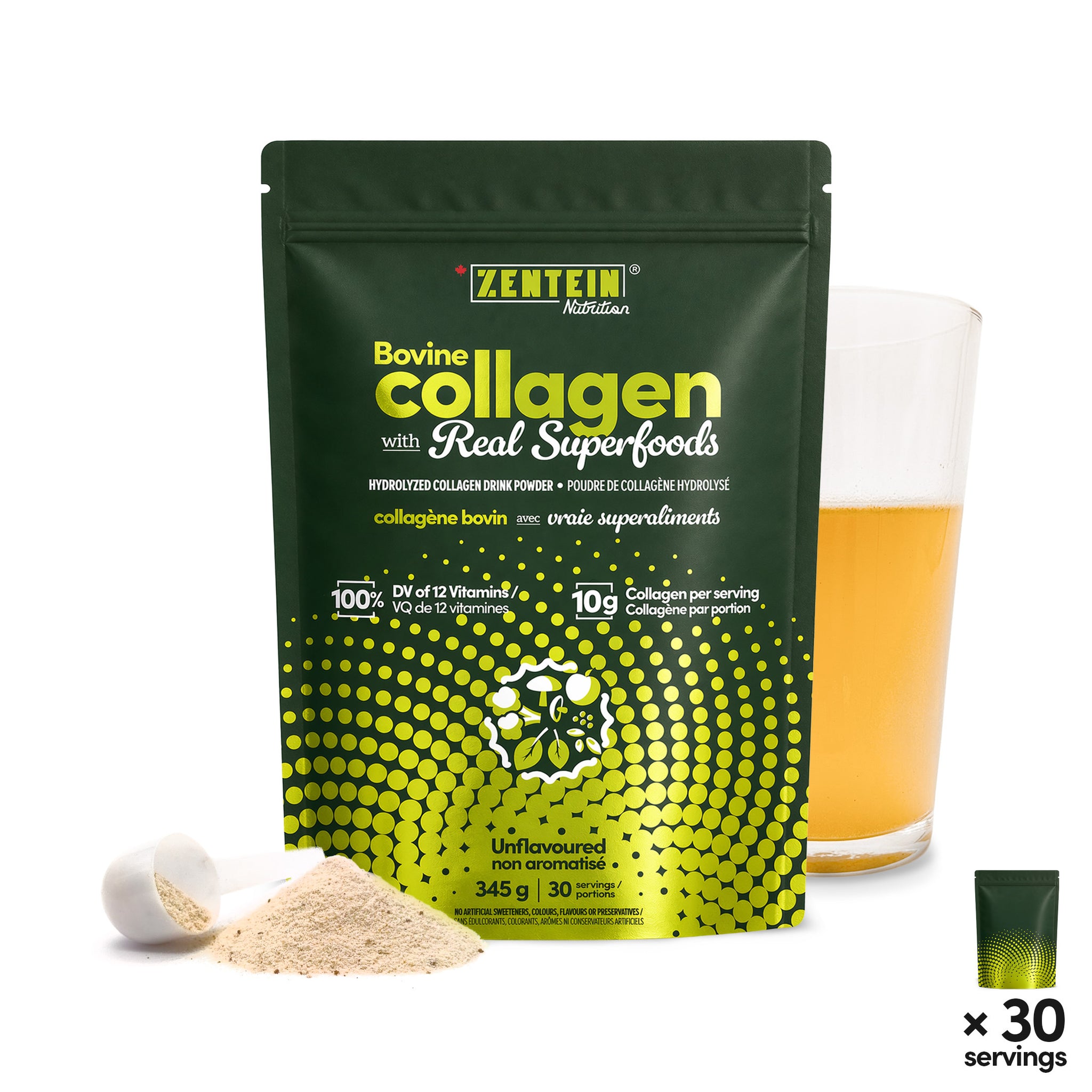
Meet Zentein’s Superfood Collagen
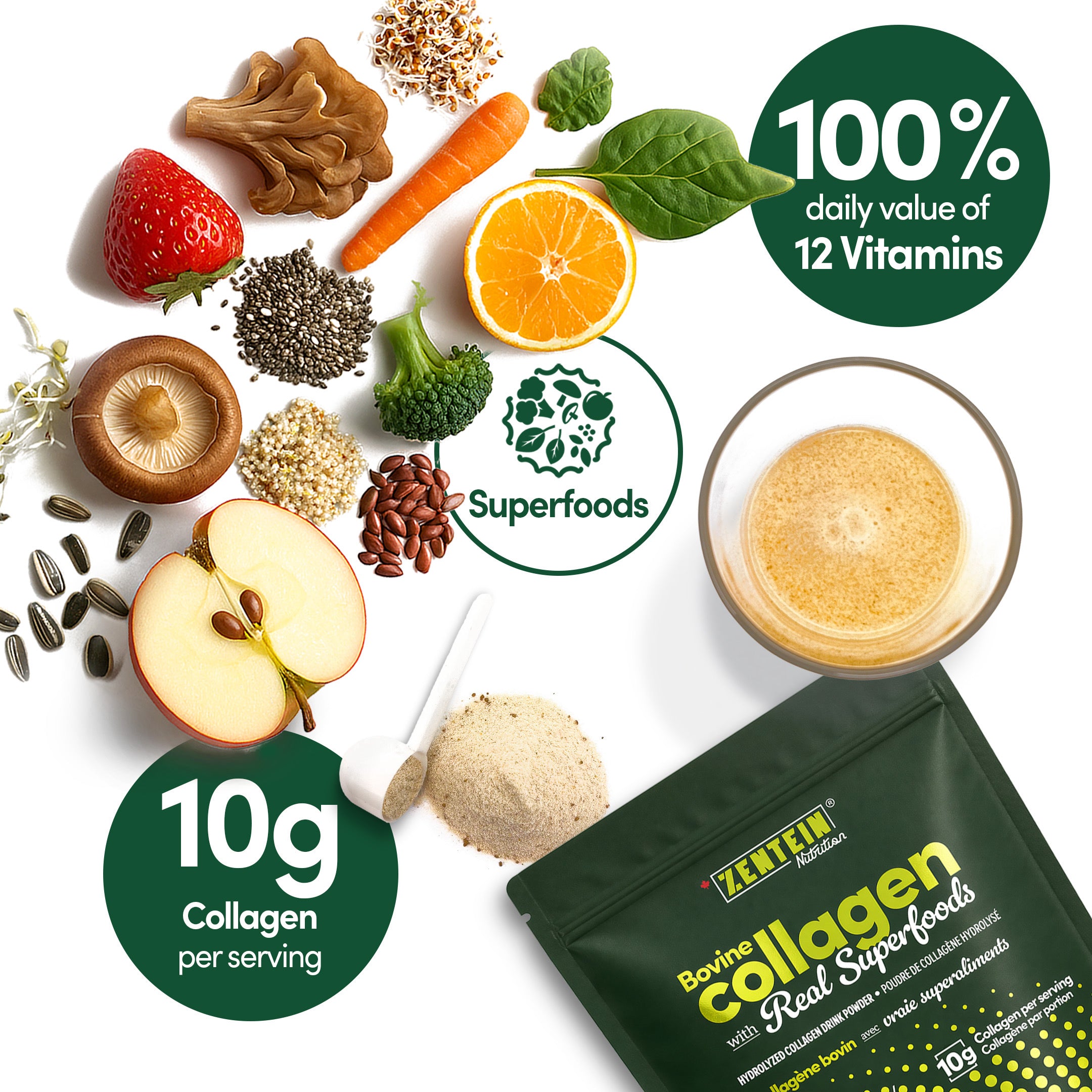
10g of Pure Hydrolyzed Collagen to support collagen production.
Natural Vitamin C sourced from real foods to support collagen formation.
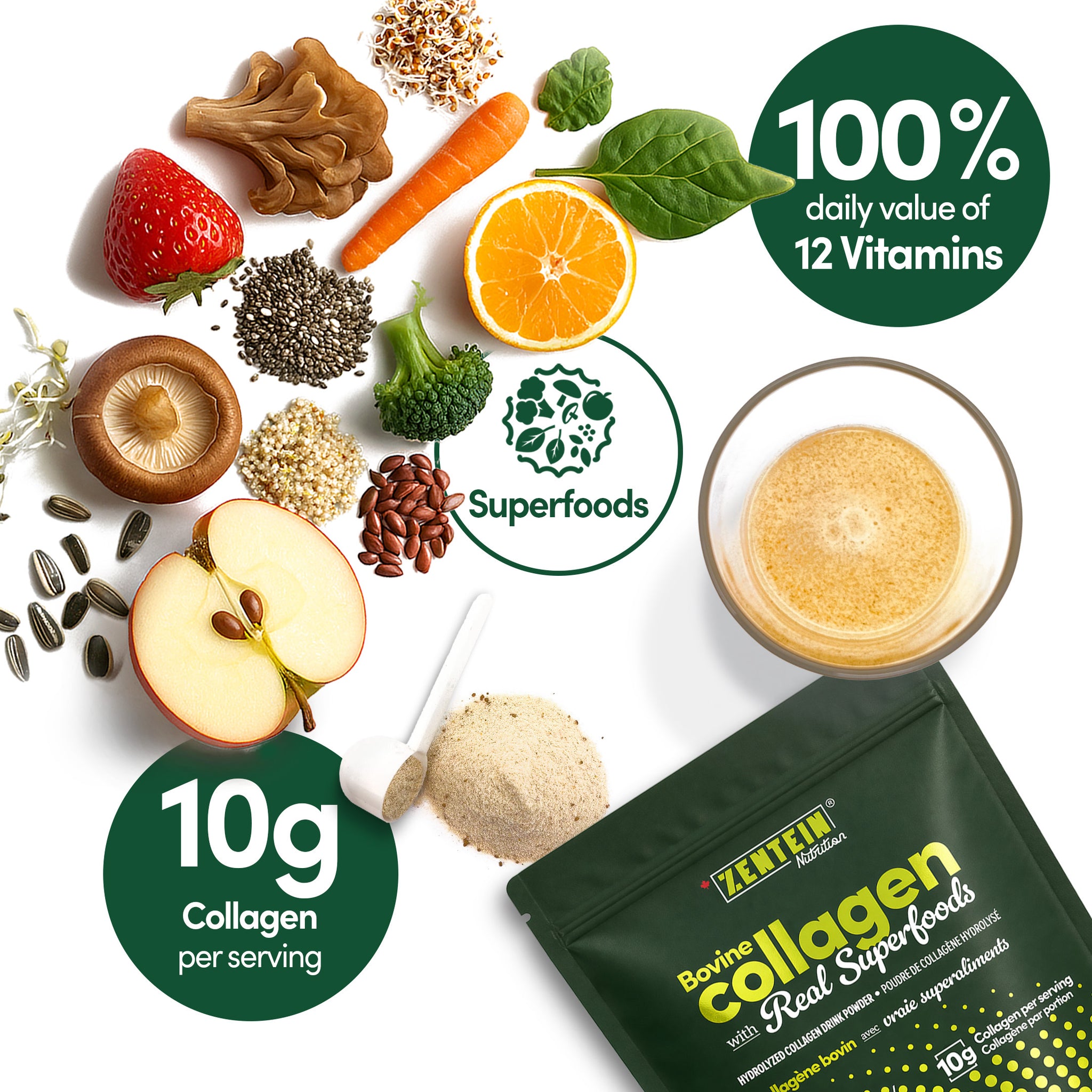
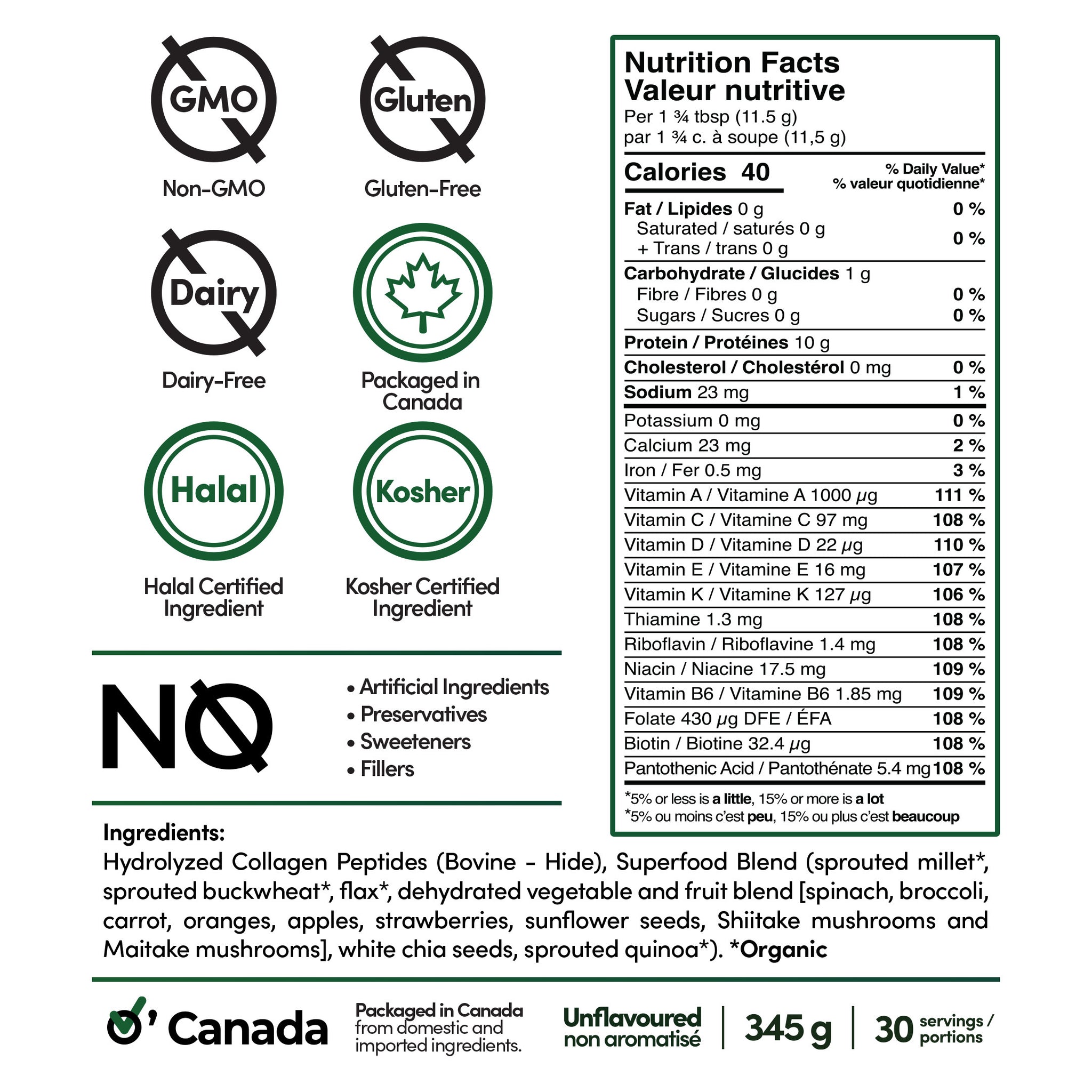
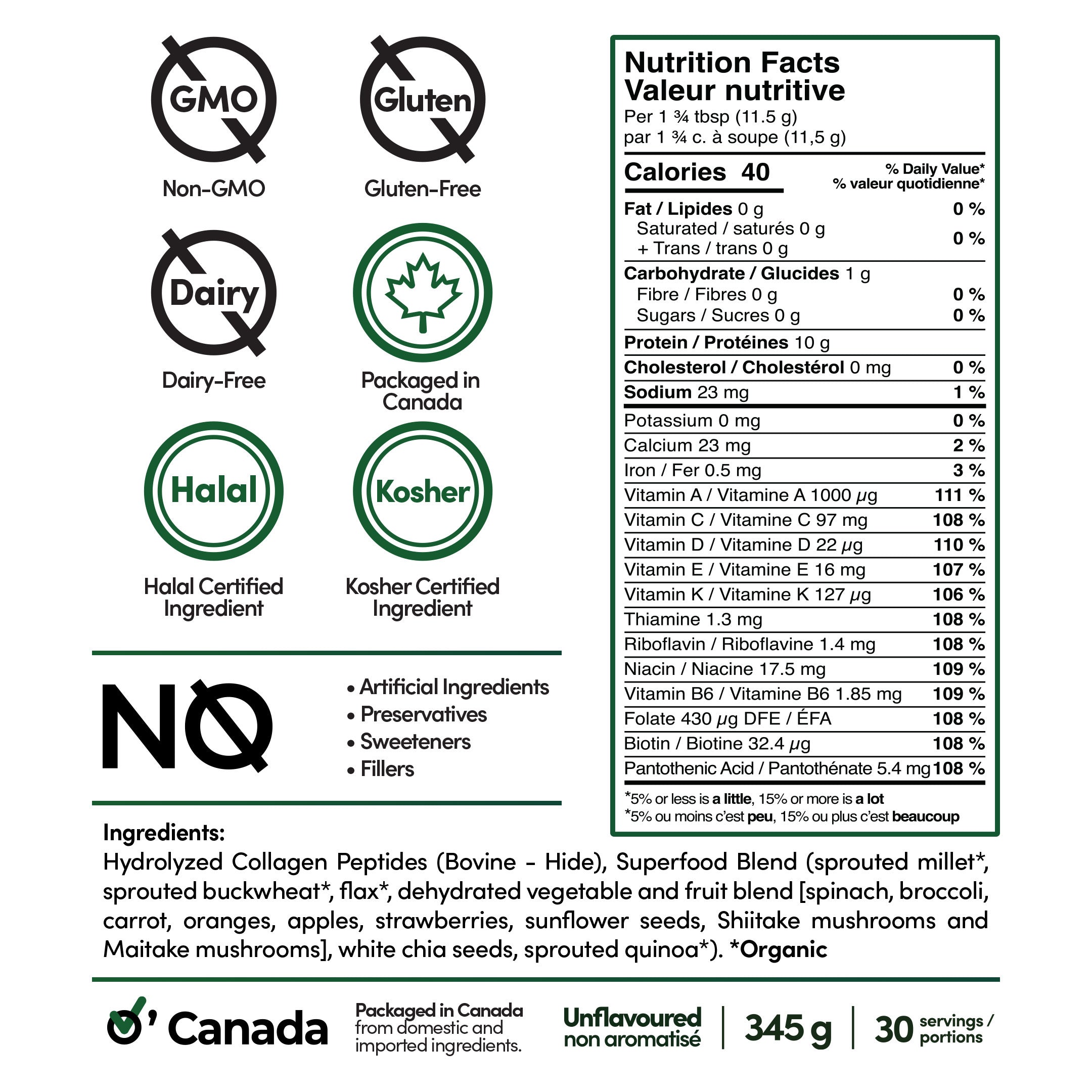
Full Day's Worth of 12 Essential Vitamins (100% Daily Value) from 14 different fruits, veggies, mushrooms and seeds.
A collagen supplement. A superfood blend. And a multivitamin. Simplified into one daily scoop.
12 Essential Vitamins
Daily Nutrition in One Scoop

04
How Long Does It Take for Collagen To Work (According to Science)
If you’ve tried collagen products before and saw no results, this might be why.
What the Science Says: Two independent meta-analyses which combined 40 clinical trials and over 2,600 participants suggest that 8-12 weeks is where meaningful improvements in skin elasticity and moisture emerge.2 4
Best Use: Most clinical protocols run 12-24 weeks of daily collagen supplementation.
But the truth is, staying consistent is much easier when the powder is flavourless and mixes well (clump-free).
Zentein's collagen contains tiny, porous granules that absorb water instantly, helping it dissolve quickly from the inside out.
Consistency Matters
Self-Dissolving Technology
Superfood Collagen in Action: No clumping, no chalky texture. No stirring required.
One Scoop, Stacks of Benefits

Clump-Free
Dissolves instantly in any liquid

Highly Bioavailable
Pure hydrolyzed bovine collagen supports efficient absorption

Naturally Unflavoured
No weird aftertaste when added to tea, coffee or water

12 Essential Vitamins
Micronutrients sourced exclusively from real foods
05
30 Days to Make Sure It's Right
From the moment your order arrives, you have a full 30 days to make sure everything's right.
If anything shows up damaged, defective, or incorrect, just reach out to info@zentein.ca and a real person will get back to you, not a bot!
Our team reads and replies to each message and will keep you updated at every step, so you're never left wondering where things stand.
That's our promise: fast, human, and accountable support, every time.
Reach Out Anytime
Fast Human Support

One Scoop · 10g Collagen · 12 Essential Vitamins
Give Your Body Collagen
It Can Actually Use
Zentein Superfood Collagen: pure hydrolyzed bovine collagen with a superfood blend of 14 natural fruits, veggies, mushrooms and seeds to give you a daily protein that does more than rebuild. Support the beauty that starts from within for $1.60/day.



Ingredient Comparison
How Zentein Superfood Collagen
Compares


| Scoop For Scoop | ||
|---|---|---|
| ✔ | 12 Essential Vitamins | ✘ |
| ✔ | Vitamin C (Key Cofactor for Collagen Synthesis) | ✘ |
| ✔ | Zero Chemical Ingredients | ✘ |
| ✔ | Trace Minerals & Micronutrients | ✘ |
| ✔ | Instant & Self-Dissolving | ✘ |
| ✘ | Clumpy Texture & Weird Aftertaste | ? |
| ✘ | Preservatives, Fillers & Binders | ? |
| ✘ | Artificial Sweeteners | ? |
| ✘ | Proprietary Blends (Hidden Doses) | ? |
Only natural ingredients in every serving. No artificial colors. No artifical sweeteners. No artificial anything.
FAQs


References:
- Brincat, M., Versi, E., Moniz, C. F., Magos, A., de Trafford, J., & Studd, J. W. (1987). Skin collagen changes in postmenopausal women receiving different regimens of estrogen therapy. Obstetrics and Gynecology, 70(1), 123–127. https://pubmed.ncbi.nlm.nih.gov/3601260/
- Dewi, D.A. et al. (2023) (PDF) exploring the impact of hydrolyzed collagen oral supplementation on skin rejuvenation: A systematic review and meta-analysis, ResearchGate. Available at: https://www.researchgate.net/publication/376386798
- Murad, S., Grove, D., Lindberg, K. A., Reynolds, G., Sivarajah, A., & Pinnell, S. R. (1981). Regulation of collagen synthesis by ascorbic acid. Proceedings of the National Academy of Sciences, 78(5). https://doi.org/10.1073/pnas.78.5.2879
- Pu, S.-Y., Huang, Y.-L., Pu, C.-M., Kang, Y.-N., Hoang, K.D., Chen, K.-H. and Chen, C. (2023). Effects of Oral Collagen for Skin Anti-Aging: A Systematic Review and Meta-Analysis. Nutrients, [online] 15(9), p.2080. doi:https://doi.org/10.3390/nu15092080
- Pullar, J.M., Carr, A.C. and Vissers, M.C.M. (2017). The Roles of Vitamin C in Skin Health. Nutrients, 9(8), p.866. doi:https://doi.org/10.3390/nu9080866.
