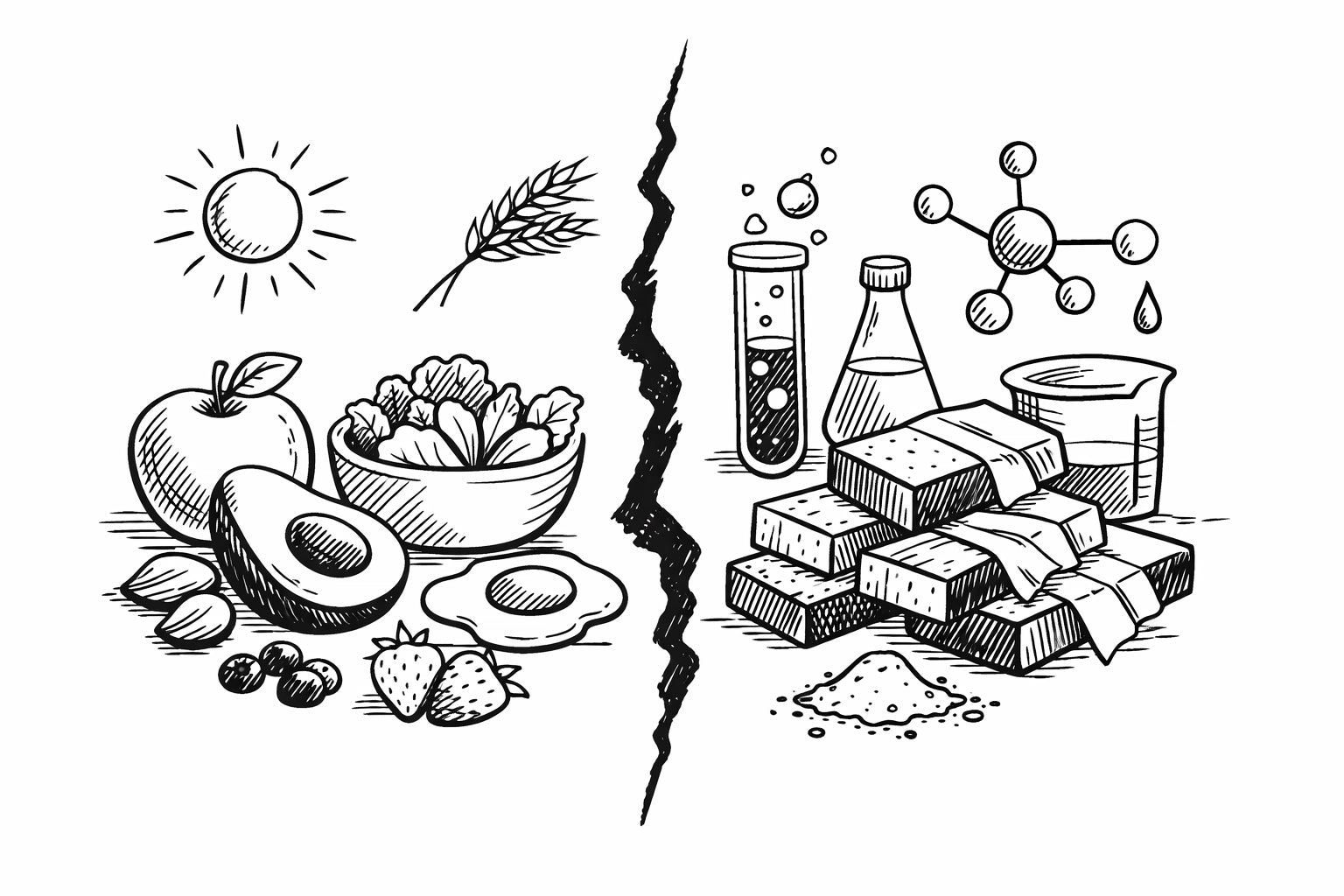
Walk into any grocery store and you'll find an entire aisle dedicated to protein bars. They promise convenience, clean energy, and guilt-free snacking. But here's the thing most brands won't tell you: the vast majority of these bars are ultra-processed foods dressed up in health-conscious packaging.
We're not here to shame anyone for grabbing a bar on a busy morning. But if you're choosing protein bars because you think they're genuinely good for your body, it's worth understanding what's actually inside, and why real food ingredients make all the difference.
The Sugar and Sweetener Problem
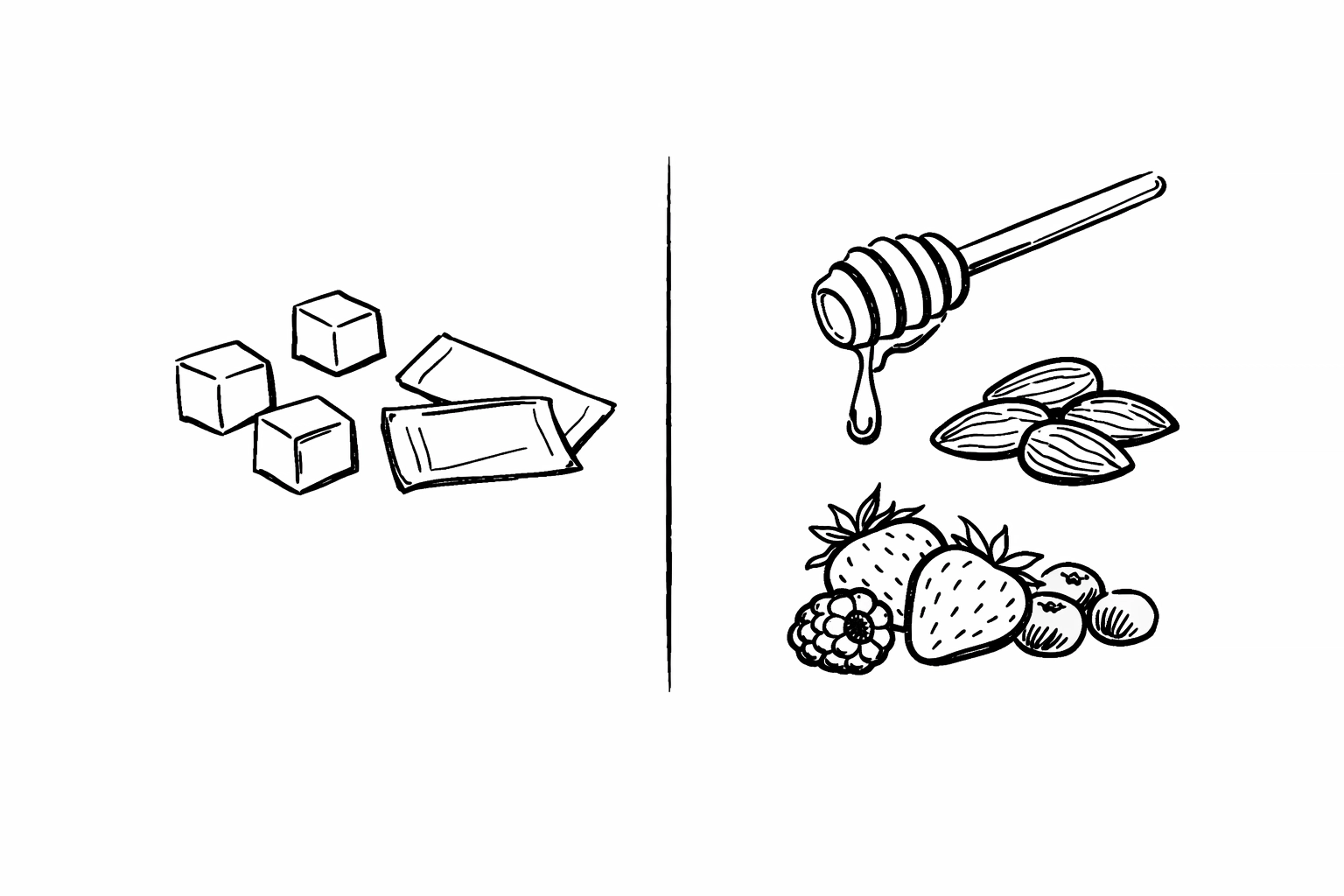
Bars marketed as "low-sugar" or "sugar-free" aren't necessarily better. They typically swap out sugar for artificial sweeteners or sugar alcohols instead. These alternatives come with their own concerns, some studies suggest they can disrupt gut bacteria and potentially increase the risk of metabolic issues. Recent research even points to certain sugar alcohols like erythritol and xylitol potentially affecting heart health by increasing the risk of heart attacks, stroke, and blood clotting.
When Isolation Means Loss
Here's something most protein bar labels won't explain: the protein itself is usually an isolate. That means it's been extracted and processed down to near-pure protein form, stripped away from the whole food it originally came from.
On paper, this sounds efficient. More protein per gram, right? But when you isolate protein, you also lose the fiber, vitamins, minerals, and beneficial compounds that exist naturally in the original food source. A piece of chicken doesn't just give you protein, it delivers B vitamins, selenium, and phosphorus. A handful of almonds provides protein plus healthy fats, vitamin E, and magnesium. Legumes bring protein alongside fiber and folate.
When you eat a clean protein bar made from actual whole foods, you're getting a more complete nutritional package. When you eat a bar made with protein isolates and artificial sweeteners and junk fillers, you're getting... well, exactly that. And your body notices the difference.
The Bigger Picture on Processing
Ultra-processed foods: which most commercial protein bars fall into: have become a serious public health concern. We're not talking about mild processing like freezing vegetables or pasteurizing milk. We're talking about foods that have been broken down, recombined, and reformulated with additives, preservatives, and chemical flavor enhancers.
The research on this is pretty clear. Diets high in ultra-processed foods are linked to type 2 diabetes, heart disease, certain cancers, and gut health issues. One large study found that people who ate higher amounts of ultra-processed foods had a greater risk of high blood pressure, cardiovascular disease, heart attacks, strokes, and early death.
And here's a finding that might surprise you: one study showed that eating a protein bar daily may actually lead to consuming more calories overall: and over time, to weight gain. That's the opposite of what most people are trying to achieve when they choose a protein bar in the first place.
The Convenience Myth
We get it. Life is busy. Protein bars are portable, shelf-stable, and require zero prep time. But here's what we've noticed: when convenience becomes the only factor in food decisions, nutrition takes a back seat.
The problem isn't that you occasionally grab a bar when you're in a rush. The problem is when ultra-processed bars become your default daily protein source. That habit crowds out real, whole foods from your diet: foods that deliver nutrients in forms your body actually recognizes and uses efficiently.
And honestly? Whole foods can be pretty convenient too. A handful of nuts takes the same amount of time to eat as unwrapping a bar. Greek yogurt requires a spoon but no cooking. Hard-boiled eggs can be prepped ahead in batches. Even a piece of fruit with nut butter checks the convenience box while delivering real nutrition.
When we prioritize convenience without considering what we're actually putting in our bodies, we end up with more processed foods than we need: and potentially more protein and calories than our bodies can use effectively.
What Real Food Actually Looks Like
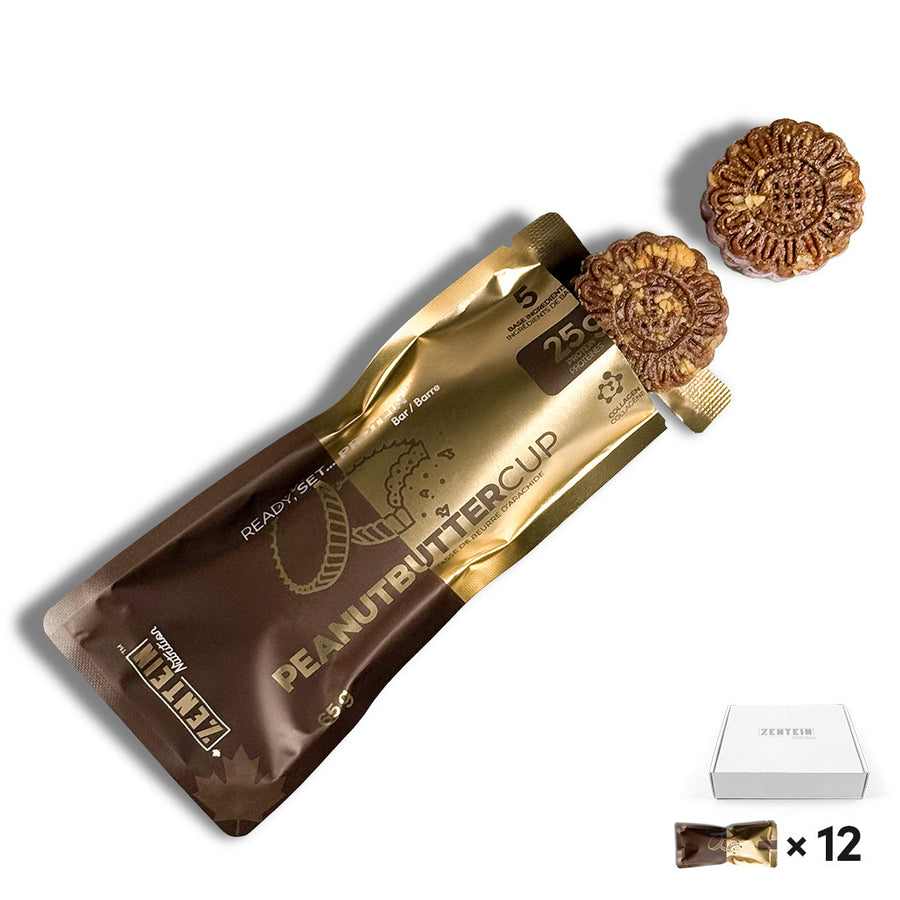
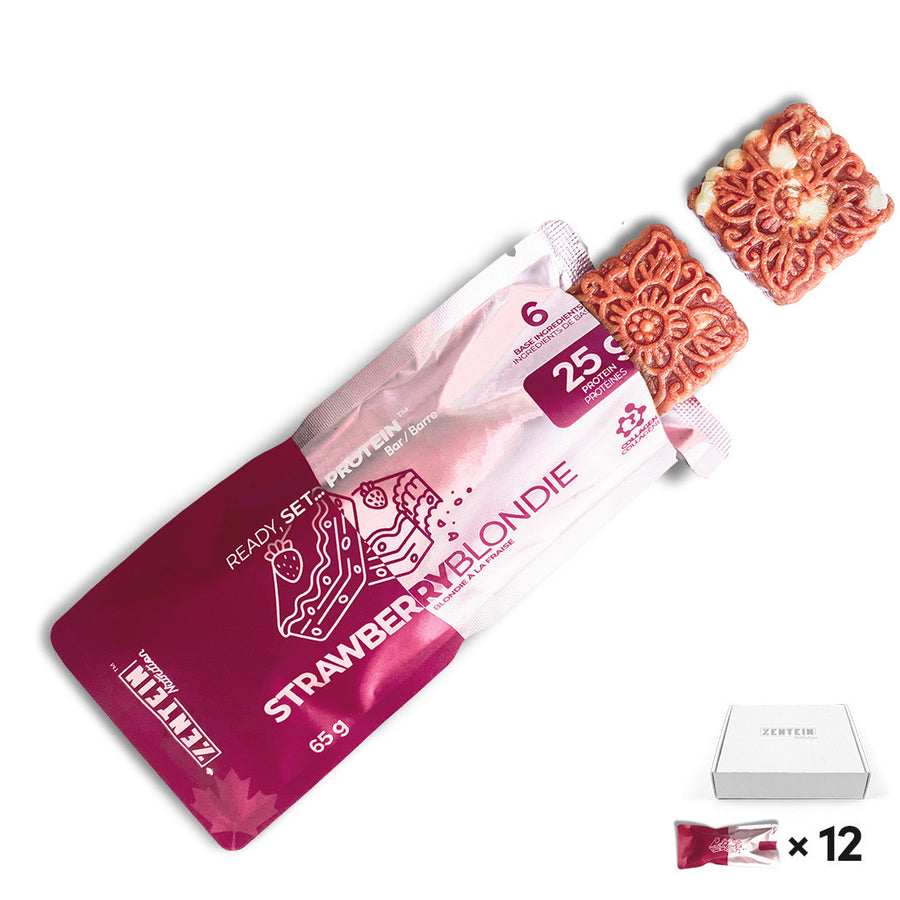
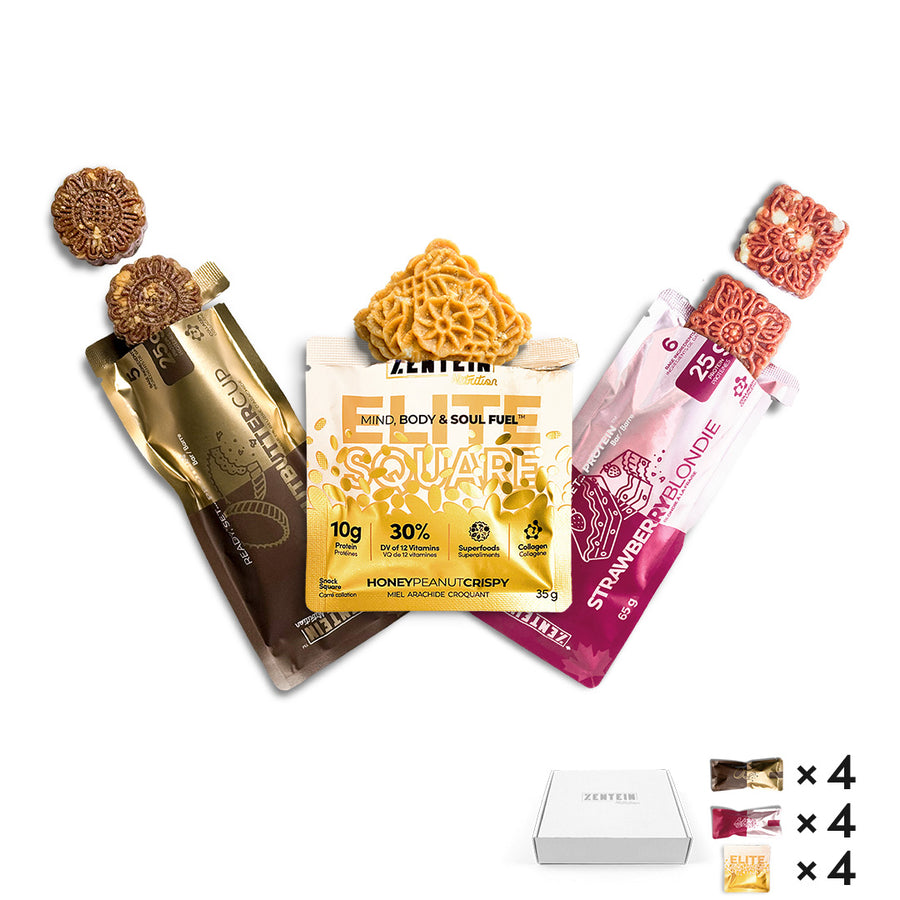
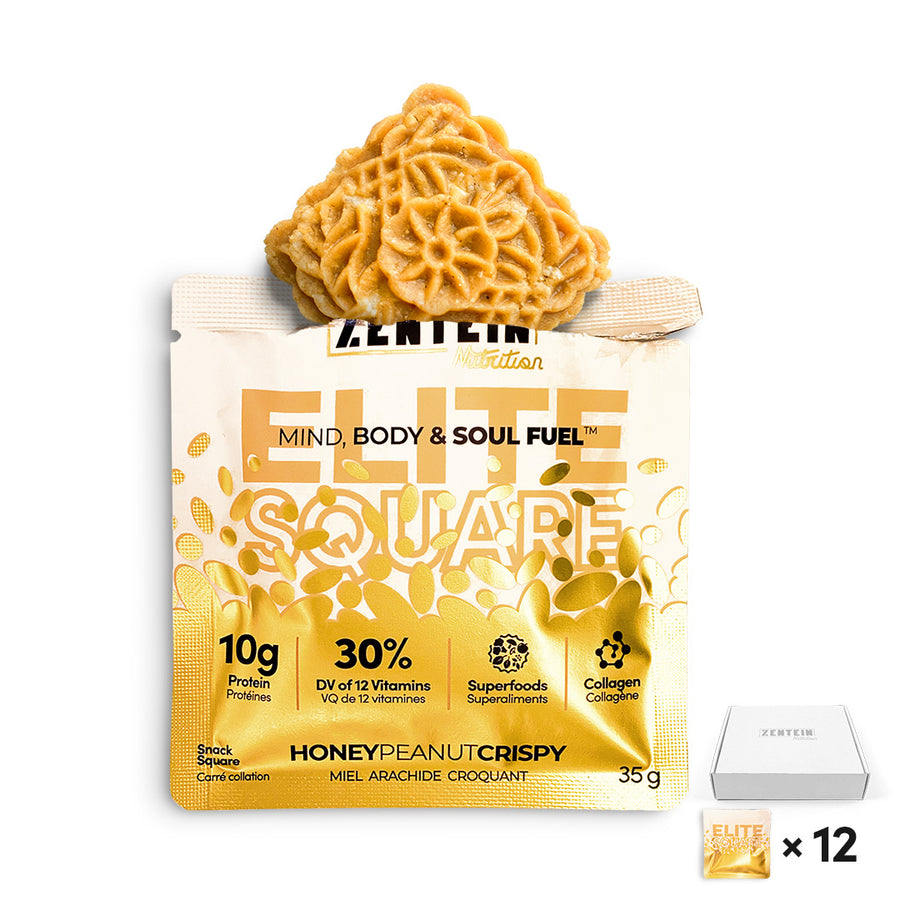
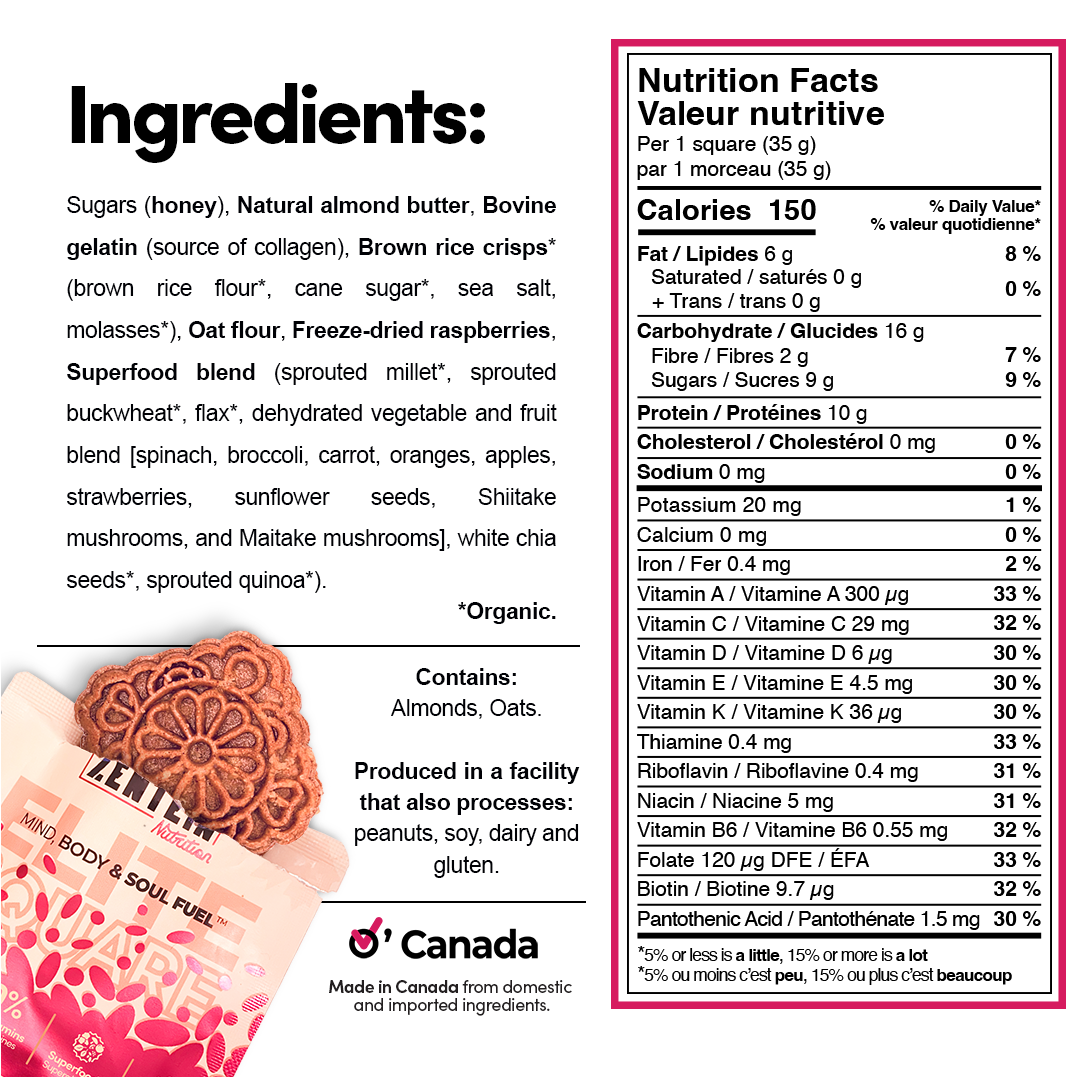
When you look at truly whole-food-based options, you'll see ingredients you recognize: nuts, seeds, honey, oats, fruits. Maybe some collagen from grass-fed sources. Perhaps a blend of vegetables and functional mushrooms. These are ingredients that have been used for centuries because they nourish the body in ways that processed isolates simply can't replicate. (Hint: This is exactly what we provide in Zentein Elite Squares)
Real food means you're getting some**** fiber along with your protein, which helps with satiety and digestive health. You're getting naturally occurring vitamins and minerals in their whole-food forms, which tend to be more bioavailable than synthetic versions. You're avoiding the long list of preservatives, binders, and artificial ingredients that show up in most commercial bars.
And here's something worth noting: real food doesn't just fuel your body differently: it tastes different too. When you're not masking the flavor of protein isolates with artificial sweeteners and chemical flavorings, you get to experience what actual ingredients taste like together.
Our Approach at Zentein
We created our Elite Squares because we got tired of choosing between convenience and actual nutrition. Each square is built with over 15 whole-food ingredients: things like natural almond butter, Canadian honey, grass-fed collagen, oats, freeze-dried fruits, and a superfood blend of vegetables, seeds, and fungi.
You're getting 10 grams of protein per square, but it's not coming from isolated powders. It's coming from real collagen and whole food sources like nut butters and seeds that deliver nutrients the way nature intended. Every square also provides 30% or more of your daily value for 12 + essential vitamins: not from synthetic additives, but from the actual foods inside.
No artificial sweeteners. No preservatives. No ingredient you need a chemistry degree to pronounce.
Key Takeaway: Most protein bars are ultra-processed foods loaded with added sugars or artificial sweeteners, isolated proteins, and additives that can undermine your health goals. Real whole-food ingredients deliver complete nutrition; protein plus fiber, vitamins, minerals, and beneficial compounds; without the processing downsides. We created Zentein to provide these whole foods in convenient ready-to-eat formats so you have an alternative to the conventional processed snacks.
We wish you the best
Keep exploring, or turn the idea into an everyday routine.